Should You Live in Your Home During a Remodel?
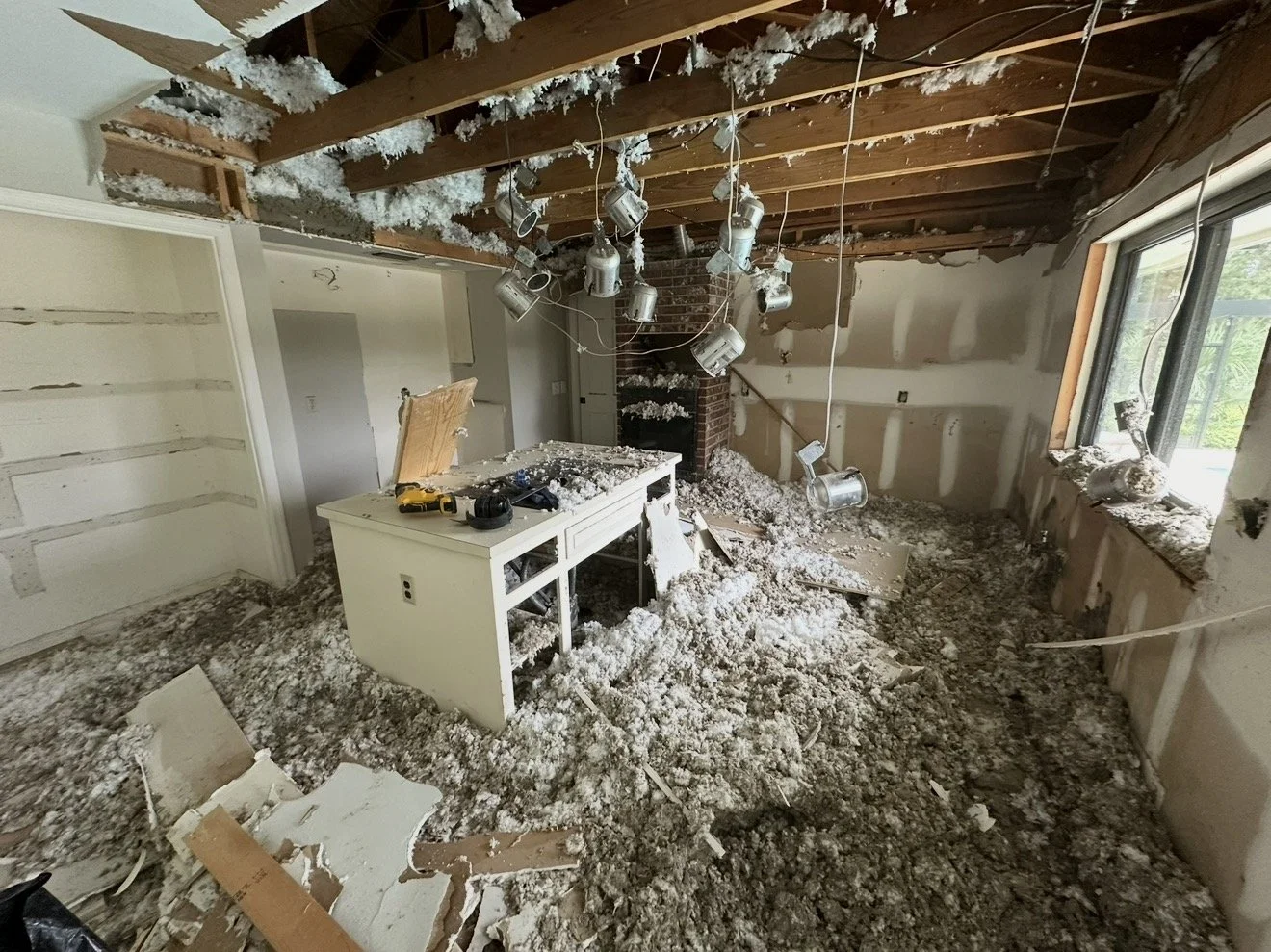
Demo day in our Sweetwater kitchen in Longwood, ceiling opened to the joists. The finished room is a world away from this. See how it turned out.
Every homeowner who signs a remodel contract runs into the same question before demo day. Do you stay put and live around the work, or move out until it is done. The clearest way to think about it is by how much of your home the project takes offline. We sort projects into four levels of disruption, and the right call usually falls out of which level you are in.
Level One: A Single Room or Bathroom
This is the easy one. A bathroom, or one room on its own, and you stay every time. Dust from a project this size is simple to contain, and daily life around it barely changes. If the noise and demolition start to wear on you, plenty of people take a short trip for the worst of it and come back once the loud part is behind them. That is the whole strategy at level one. There is no case for moving out.
Level Two: The Kitchen
A kitchen is annoying, but you can still function. The money you would spend on somewhere else to live mostly turns into a bigger food bill, since you end up eating out more. You can wash a few dishes in the bathroom or laundry sink, the refrigerator moves to another room and keeps running, and the coffee maker goes right along with it. It is not the kitchen you are used to, but the house still works. Most families ride out a kitchen remodel in place.
Level Three: A Kitchen Plus Bathrooms, or Most of the Flooring
This is where it gets real. A kitchen plus multiple bathrooms, or a kitchen plus the bulk of your flooring, takes a large share of the home offline at once, and the easy workarounds start to run out. Moving out here is a real displacement and an added expense stacked on top of an already large project, which is exactly why it is a hard call. It can be done while staying, plenty of people manage it, but comfortable is not the word for it. This is the level to sit down and think through carefully with your builder before you decide.
Why Tearing Out Tile Changes the Calculation
Flooring earns its own note at this level, because pulling up tile is not ordinary dust. Tile, thinset, and the concrete under them contain crystalline silica, and breaking them out sends fine dust through the house that settles on everything and is hard to fully clean up. It is a respiratory hazard, which is why the crew wears respirators for it. A whole house tile removal is the strongest reason at this level to spend the worst stretch somewhere else, especially with young kids, older adults, or anyone with asthma or allergies in the house. Luxury vinyl plank does not create the same problem, so the floor already down matters as much as the one going in.
Level Four: A Full Home Remodel
This one is not a choice. Do not plan to live there. Expect a moving company to pack your furniture out and put it in storage for the run of the project. The reason is simple. To run a job this size well and finish it as fast as possible, we need a blank slate. If you decide you cannot leave, the whole project has to be broken into stages so you always have somewhere to live, and that means doing the same work in passes, rough ins more than once, drywall crews back more than once, and so on down the line. It still gets done, but it gets expensive in a different way and it takes longer. A vacant house is what keeps a full remodel efficient.
A Few Things Specific to Florida Homes
Summer heat makes the air conditioning matter more here than almost anywhere, so open walls, propped doors, and disrupted ductwork hit harder in July than they would up north, and a running AC system pulls dust through the house fast. That is why containment is built into the plan from day one rather than treated as an afterthought. If you work from home, weigh that early too, since a construction zone is a hard place to hold calls or focus.
How the Right Crew Changes the Math
Wherever you land, the builder you hire moves the line on what is livable. A crew that seals the work zone with dust barriers, protects floors and walkways, contains debris, and cleans up at the end of each day makes staying far easier than one that treats the whole house as a work site. We plan every project around keeping the parts of your home you are still using clean, safe, and reachable, with real barriers between the work and the rest of the house and steady word on which utilities go down and when.
Frequently Asked Questions
How do you decide whether to move out during a remodel? It comes down to how much of the home the project takes offline. A single room or bathroom, you stay. A kitchen, you can still function in place. A kitchen plus multiple bathrooms or most of the flooring is a harder call. A full home remodel means moving out.
Do I need to move out for a kitchen remodel? No. A kitchen is disruptive but livable. You can relocate the refrigerator and coffee maker to another room, wash dishes in a bathroom or laundry sink, and lean on takeout. Most families stay in place through a kitchen.
Do I have to move out for a whole home remodel? Yes. A full home remodel is not a project you live through. Plan on a moving company packing your furniture into storage for the run of the job. A vacant house lets the work move at full speed and finish sooner.
Why is a whole house tile floor removal such a problem? Tile, thinset, and the concrete beneath contain crystalline silica, and breaking them out sends fine dust through the house that coats everything and is hard to fully clean up. It is a respiratory hazard, so it is the clearest case for staying elsewhere during the worst of it, especially with children, older adults, or anyone with asthma or allergies.
Can I stay during a full home remodel if I really want to? It can be done, but the project has to be staged so you always have a place to live, which means rough ins, drywall, and other trades coming back in multiple passes. It costs more that way and takes longer. A blank slate is what keeps a full remodel efficient.
The Short Version
Levels one and two, you stay and plan around it. Level three, you weigh comfort against the cost of a second place to live, and if tile is coming out across the house, plan to be gone for the worst of it. Level four, you pack up and let the work move at full speed, because that is what gets you back into a finished home soonest. The way to know which level you are in is to walk the project with your builder before demo starts.
Thinking about a remodel and not sure what it will take to live through it? Tell us about your project and we will walk you through it.